GET STARTED TODAY WITH A FREE TRIAL LESSON + AN EXCLUSIVE OFFER. | SPACE IS LIMITED. NEW CUSTOMERS ONLY. EXCLUSIONS APPLY.
The History
Karate's Expansion
1879 – Present
The Meiji Restoration & the Emergence of Modern Karate
空手
The rich tapestry of martial arts has evolved through centuries of cultural interaction and adaptation, particularly in the case of Karate, which has its roots in the Ryukyu Islands. Influenced by cultural exchanges with China and a series of weapon bans, the Ryukyuans skillfully blended their indigenous fighting techniques with Chinese martial arts. This fusion gave birth to a refined discipline that became a cornerstone of the Ryukyu warrior class. As the art of Karate expanded beyond the elite warriors to include diplomats’ sons, members of the upper class, noble families with Chinese ancestry, the king’s bodyguards, and prosperous merchants, it transformed into a vital aspect of their cultural heritage, shaping identities and fostering a sense of community.
Karate practices eventually spread to Okinawan’s Shuri, Naha, and Tomari regions, where three self-defense forms were developed. Each area contributed its own flavor to the martial arts, reflecting the diverse societal groups and their approaches to combat. Shuri Te, practiced in the royal castle of Shuri, was considered more of an offensive system, taught to the warrior and aristocratic descendants, and used less Chinese influence within its martial arts. From the commercial city of Naha, Naha Te focused on China’s fluid, circular movements and was considered more of a defensive system. Tomari Te, from a fishing village between Shuri and Naha where Karate practitioners were regularly challenged, combined elements of Shuri Te and Naha Te within its self-defense. Despite appearing somewhat different, they all fundamentally utilize the same techniques as Shuri Te and are considered one unified style in Okinawa. As many Karate styles have developed over the years, today’s Karate can still be traced back to one of these three self-defense forms.
During the Meiji Restoration, the empire of Japan annexed the Ryukyu Islands, ending the Imperial Order of the Ryukyu Kingdom and its tributary system with China, becoming the Okinawa Prefecture in 1879. Ryukyu’s royal, warrior, and common classes were combined, and the old ways of the Ryukyu Kingdom ended. The first-class aristocrats and Bushi caste lost their positions, leaving the old Ryukyu Kingdom’s capital of Shuri to live as commoners throughout the countryside. Karate training has been a secret since the refinement of Ryukyu’s unarmed combat techniques. During the Showa Period of 1929-1989, times changed, allowing anyone wanting to study martial arts, including the common class, to do so. Many among the Bushi remained reluctant to teach just anyone and died without passing their art on. Others would entrust their knowledge only to their family or a single student. This exclusivity limited the spread of classical forms of Karate, keeping much of the knowledge contained within small circles. However, as the socio-political climate evolved, more Karate schools emerged, and the teachings began to be shared more broadly.
The classical warrior period of using martial arts for real combat applications transitioned into a traditional era focused on spiritual and physical enrichment, emphasizing karate-dō, or “the way of karate.” Karate became part of Japan’s educational system, and practitioners adopted the dōgi, keikogi, or karategi uniform, often with an obi, a colored cloth belt representing skill levels.
New systems emerged as practitioners trained in different Karate styles, some closely tied to the original forms and others influenced by more modern ideas. Kempō or Kenpō, meaning “fist method,” is used in some Karate styles to describe the ancient Chinese empty-hand fighting arts used within their respective systems. On the other hand, in 1945, toward the end of World War II, Karate gained popularity as a sport, leading to the creation of rules and point systems, marking the start of the modern Karate era. New techniques and Karate styles were created specifically for use in the sport. This transformation revitalized the classical arts and allowed for a rich exchange of techniques and ideas across cultures, solidifying Karate’s place in global martial arts history.
By the late 20th century, martial arts such as Karate gained international recognition, with practitioners worldwide embracing the discipline and philosophy that originated from the once-restricted practices of the Ryukyu Kingdom. After World War II, Okinawa was placed under American rule, where U.S. soldiers brought Karate to America. On May 15, 1972, America reverted Okinawa to Japan. Much of today’s Karate blends classical techniques with modern training methods while maintaining its core values of respect, discipline, and perseverance. Schools and dojos worldwide offer various styles, inviting new generations to explore the art form’s rich history and the life lessons it imparts. As practitioners celebrate the global community fostered by this martial art, they also honor the roots from which it sprang, ensuring that the legacy of the Ryukyu Kingdom and the spirit of its warriors live on in every dojo.
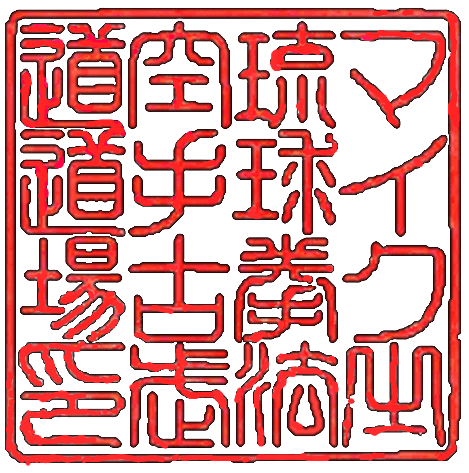
Today, there are many styles of Karate, each with unique characteristics and philosophies. We use the term “RYUKYU KEMPO KARATE & KOBUDO,” a generic term to describe our style and to pay homage to the ancient “Bushi” warrior class and the esteemed masters of Okinawa Karate who passed down their knowledge to form the system we use today. Ryukyu Kempo Karate is a classical Okinawan Karate focusing on a comprehensive approach to martial training, combining striking techniques, joint locks, and grappling. Unlike many modern interpretations of Karate, which emphasize the common art of kicking and punching, our approach to Ryukyu Kempo Karate is rooted in the original concepts of the ancient Ryukyu arts. This distinctive lineage allows practitioners to uncover profound techniques and insights of a secret art within Karate. Known as the “old way of Karate,” our non-sporting style stresses the character-building, self-confidence, self-discipline, physical strength, and self-defense that comes from practicing Classical Okinawan Karate.